
On this page
- First, Let's Clear Up What "Belly Fat" Actually Means
- Why Spot Reduction Doesn't Work (And Never Will)
- Why Crash Dieting Backfires Specifically for Belly Fat
- What Actually Works: The Evidence-Based Approach
- Why "No Crash Dieting" Is the Right Framing, Not Just a Nice Sentiment
- The Bottom Line
- FAQs: Losing Belly Fat Naturally
Tired of detox teas and crash diets that promise flat abs in a week? Discover what actually reduces belly fat — backed by research, not gimmicks — and why sustainable methods beat extreme ones every time.
Belly fat has a way of attracting more bad advice than almost any other fitness goal. Detox teas, waist trainers, "fat-burning" supplements, 500-calorie crash diets — the industry built around quick belly-fat fixes is enormous, and almost none of it is backed by real evidence. Meanwhile, the genuinely effective approach gets far less attention, mostly because it's less exciting to sell: consistent habits, applied patiently, that work with your biology instead of against it.
Let's walk through what actually reduces belly fat, why crash dieting specifically backfires for this goal, and exactly what a sustainable approach looks like.
First, Let's Clear Up What "Belly Fat" Actually Means
Not all abdominal fat is the same, and the distinction matters for how you approach losing it.
Subcutaneous fat sits just under the skin — it's the fat you can pinch. Visceral fat sits deeper, packed around your internal organs like your liver and intestines. Visceral fat is the more metabolically active and more concerning of the two, linked to increased risk of heart disease, type 2 diabetes, and systemic inflammation. The encouraging news is that visceral fat is also generally the most diet-and-exercise-responsive type of fat in the body — according to nutrition researchers, it's often the first fat to shrink once you're in a genuine, sustained calorie deficit, sometimes shrinking even before visible changes show up anywhere else.
Why Spot Reduction Doesn't Work (And Never Will)
Before going further, it's worth permanently retiring one idea: you cannot choose to burn fat specifically from your belly by training your abs. This isn't a matter of effort or technique — it's basic physiology. When your body taps into fat stores for energy, it draws from fat deposits throughout your body based on genetics, hormones, and individual fat-cell distribution, not based on which muscle you just worked. A 2013 study published in the Journal of Strength and Conditioning Research specifically tested this by having participants train only one leg for weeks; the working leg gained strength, but fat loss occurred proportionally across the whole body, not preferentially in the trained limb.
This means endless crunches, ab rollers, and waist-trimming belts don't selectively burn belly fat — though core training still has real value for posture, stability, and how your midsection looks once the fat covering it is reduced. The actual lever you have control over is total body fat, achieved through the same sustainable methods covered below.
Why Crash Dieting Backfires Specifically for Belly Fat
It's tempting to think extreme restriction would at least speed up visceral fat loss, given how responsive it is to a deficit. The research suggests the opposite happens.
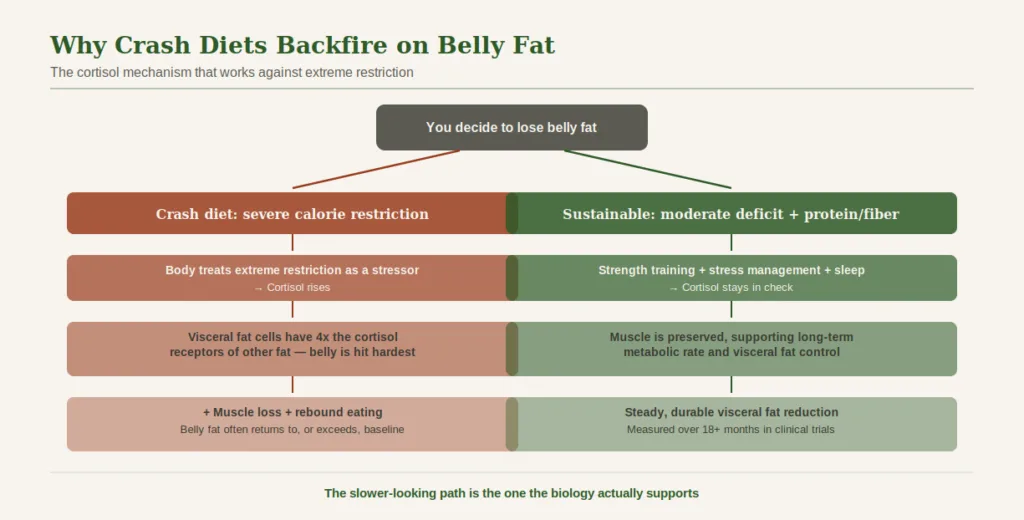
Crash dieting elevates cortisol, which preferentially fills the belly back up. This is one of the more specific, well-documented mechanisms in this entire topic: visceral fat cells contain a notably higher density of cortisol receptors than fat cells elsewhere in the body, meaning your midsection is disproportionately responsive to stress hormone signaling. Severe calorie restriction is itself a physical stressor that raises cortisol, and chronically elevated cortisol has been shown in research, including a well-known Yale study on abdominal fat and stress reactivity, to specifically promote fat storage around the organs rather than fat loss. In other words, the more extreme and stressful your diet feels, the harder you may be working against the exact area you're trying to target.
It's worth adding some nuance here, though: cortisol's role in belly fat is real, but it's not the simple, single explanation that some wellness content suggests. As one physician put it, while chronic stress can influence cortisol regulation and indirectly affect weight, the relationship also runs through sleep quality, appetite signaling, and metabolic factors like insulin and glucose regulation — it isn't a direct, one-to-one cause and effect. The practical takeaway is the same either way: managing stress meaningfully supports fat loss, even if it's not a magic standalone lever.
Crash dieting also disproportionately costs you muscle, which matters for belly fat specifically because muscle tissue supports the metabolic rate that helps keep visceral fat in check long-term. We've covered this mechanism in detail in our piece on common fat loss mistakes, where inadequate protein and overly aggressive deficits show up as two of the most damaging, avoidable errors people make.
What Actually Works: The Evidence-Based Approach
1. A Moderate, Sustained Calorie Deficit — Not an Extreme One
The foundational driver of belly fat loss is the same as fat loss anywhere else: consistently consuming fewer calories than you burn, over weeks and months rather than days. Large, long-term clinical trials — including the well-known CENTRAL and DIRECT-PLUS studies — found that sustained dietary interventions over 18 months produced substantial, measurable reductions in visceral and abdominal fat, with benefits that held up even years after the trial ended. The dietary pattern that performed particularly well in these trials was a Mediterranean-style diet, rich in vegetables, healthy fats, and minimally processed foods.
The fix: Choose a moderate deficit you can sustain for months, not one so aggressive you're fighting hunger and fatigue daily. A diet you can stick to consistently for 6 months will outperform an extreme one you abandon after 3 weeks, every single time.
2. Prioritize Protein and Fiber Specifically
Beyond just hitting a calorie target, what you eat influences belly fat through satiety and blood sugar control. Diets higher in protein and fiber consistently outperform lower-protein, lower-fiber diets of the same calorie level for reducing waist circumference, largely because both nutrients improve fullness and reduce the kind of mindless snacking that quietly erodes a deficit.
The fix: Build meals around a protein source and fibrous vegetables first, then add carbohydrates and fats around that foundation — a habit that supports waist reduction without requiring obsessive calorie counting.
3. Strength Training, Not Just Cardio
While cardio burns calories during the session itself, resistance training builds the muscle mass that keeps your metabolism running efficiently long after you've left the gym — directly supporting the kind of long-term visceral fat control that crash diets undermine. This is consistent with research-backed guidance we've covered before: strength training several times a week, combined with consistent daily movement, tends to outperform cardio alone for sustained fat loss results.
The fix: Treat strength training as your foundation, with cardio as a useful addition rather than your primary tool.
4. Manage Stress as a Genuine Fat-Loss Strategy, Not an Afterthought
Given the cortisol-visceral fat connection described above, stress management isn't a wellness add-on — it's a legitimate part of an evidence-based belly fat strategy. Practical approaches with real support behind them include regular physical activity (which itself helps regulate cortisol), adequate sleep, and any consistent relaxation practice that genuinely works for you, whether that's structured breathing exercises, time outdoors, or simply protecting downtime in your schedule.
The fix: Don't treat a stressful, sleep-deprived lifestyle as a separate problem from your belly fat goals. They're more connected than they appear.
5. Protect Your Sleep
Sleep deserves its own specific mention here, since poor sleep affects belly fat through multiple overlapping pathways — it raises cortisol, impairs appetite regulation, and reduces the energy and consistency needed to maintain training and nutrition habits. We've broken down the deeper hormonal mechanics of this in our guide on how sleep affects muscle growth and fat loss, which applies directly here given how specifically cortisol targets visceral fat.
The fix: Treat 7+ hours of consistent sleep as part of your belly fat strategy, not a separate goal competing with it for priority.
6. Be Patient With the Timeline
Visceral fat is genuinely more responsive than other fat stores, but "more responsive" still means weeks and months, not days. Real, sustainable change in waist circumference through diet and lifestyle changes has been measured over periods of 18 months and beyond in the research cited above — not the 7- or 14-day windows that crash-diet marketing tends to promise.
The fix: Set expectations around months, not days, and resist the urge to judge progress by how dramatic the before-and-after looks after just one or two weeks.
Why "No Crash Dieting" Is the Right Framing, Not Just a Nice Sentiment
Crash diets fail belly fat goals specifically, for reasons that go beyond just being hard to sustain:
- They elevate cortisol, which preferentially directs new fat storage toward the visceral region.
- They cost disproportionate muscle mass, weakening the metabolic foundation that helps keep visceral fat down long-term.
- They trigger the kind of all-or-nothing cycle where extreme restriction is followed by an extreme rebound, often leaving visceral fat levels right back where they started — or higher.
- They're nearly impossible to maintain for the multi-month timeline that real visceral fat reduction actually requires.
A moderate, sustainable approach isn't the "slower, less serious" option here. Based on the actual mechanisms involved, it's the approach most aligned with how visceral fat genuinely responds.
The Bottom Line
Belly fat, and visceral fat in particular, responds well to sustained lifestyle change — a moderate calorie deficit, adequate protein and fiber, consistent strength training, and real attention to sleep and stress. What it doesn't respond well to is the extreme, high-stress approach that crash diets represent, since the cortisol response triggered by severe restriction works directly against the area you're trying to change.
There's no genuine shortcut here, but there is a genuinely effective path — and unlike crash dieting, it's one you can actually sustain long enough to see the results through.
FAQs: Losing Belly Fat Naturally
Q: Can I lose belly fat specifically by doing ab exercises?
A: No. This is one of the most persistent myths in fitness — spot reduction isn't supported by research. Your body draws fat from stores throughout the body based on genetics and hormones, not based on which muscle you're training, so ab exercises build core strength but don't selectively burn belly fat.
Q: Why does stress seem to specifically cause belly fat?
A: Visceral fat cells have a higher density of cortisol receptors than fat cells elsewhere in the body, making the abdominal area especially responsive to stress hormone signaling. That said, the relationship is more complex than a simple one-to-one cause and effect, since sleep, appetite, and metabolic factors all play a role too.
Q: Is visceral fat actually easier to lose than other types of fat?
A: In many cases, yes. Research suggests visceral fat tends to be one of the more diet-and-exercise-responsive fat types in the body, sometimes shrinking before changes become visible elsewhere, when a genuine, sustained calorie deficit is in place.
Q: How long does it actually take to reduce belly fat naturally?
A: Meaningful, sustained reductions in waist circumference are typically measured over months, not days or weeks. Large clinical trials studying visceral fat reduction followed participants for 18 months or longer to observe durable changes.
Q: Does cutting carbs specifically target belly fat?
A: Not specifically, though diets that are higher in protein and fiber, which often naturally reduce some carbohydrate intake, do tend to outperform lower-protein, lower-fiber diets for waist circumference reduction, largely due to improved fullness and appetite control rather than carbs themselves being uniquely "stored" as belly fat.
Q: Why do crash diets sometimes seem to make belly fat worse afterward?
A: Crash diets are a physical stressor that can elevate cortisol, which is specifically linked to increased visceral fat storage. Combined with the muscle loss and rebound eating that often follow extreme restriction, this can result in visceral fat returning to, or exceeding, where it started.
Q: Is a Mediterranean-style diet actually better for belly fat than other diets?
A: Large clinical trials have found Mediterranean-style dietary patterns produced substantial, lasting reductions in visceral and abdominal fat over extended follow-up periods, making it one of the more well-supported dietary approaches specifically studied for this goal, though overall calorie balance still matters most.