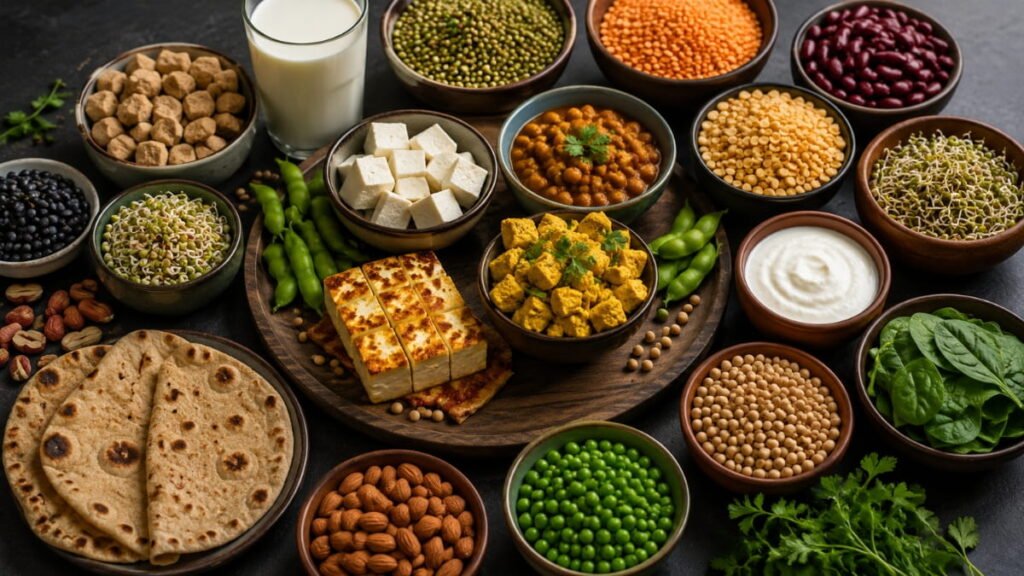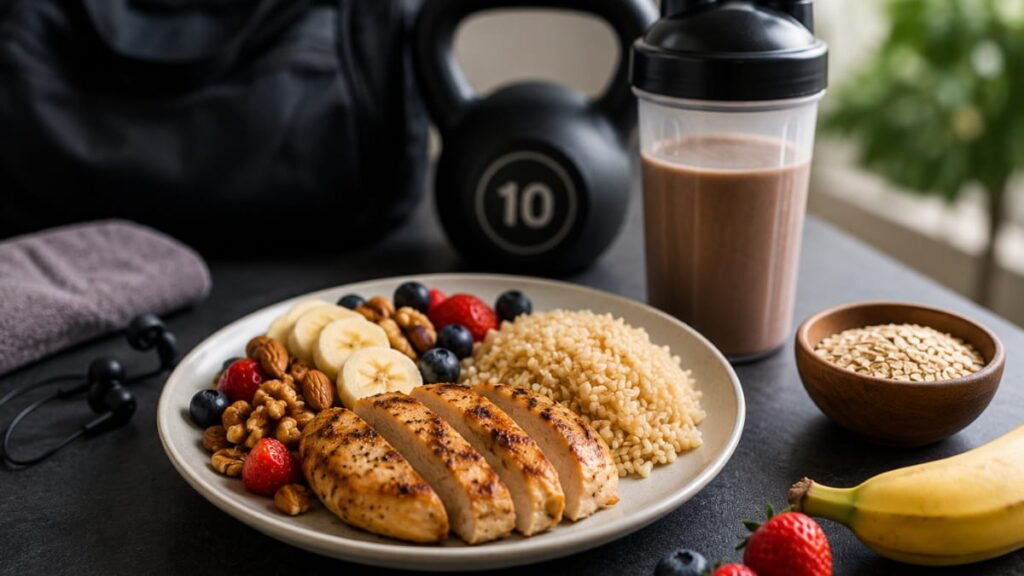
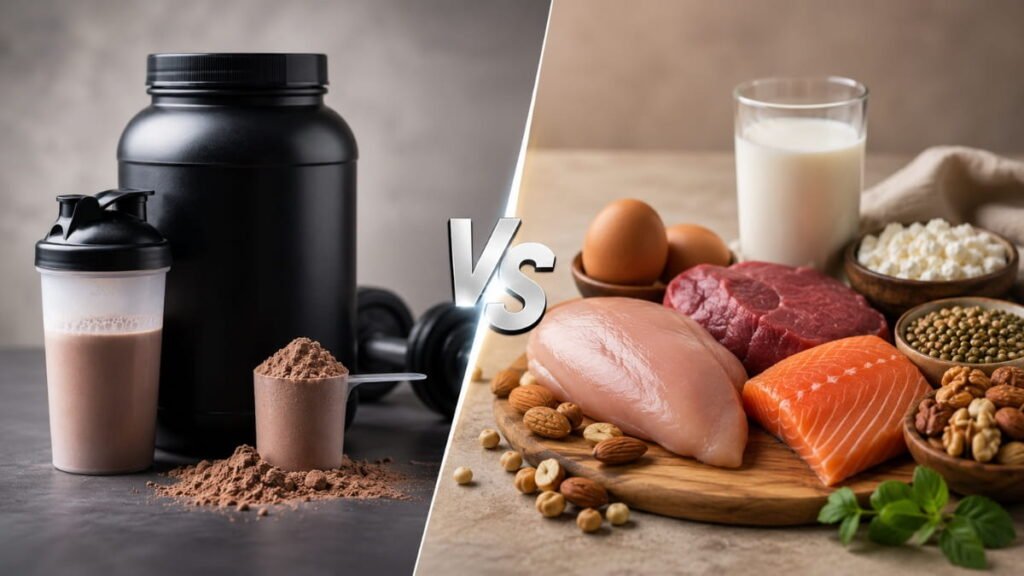
Scoop of whey or a plate of chicken and dal? Here’s what the actual research says about whey protein versus whole food protein sources — and when each one genuinely makes sense.
Walk into any gym conversation about protein, and you’ll hear two confident, opposite opinions: “Whey is basically processed junk, just eat real food,” and “Whey is scientifically superior, whole food can’t compete.” Both camps are partly right and partly wrong, which is exactly why this question keeps coming up. The honest answer isn’t that one is universally better — it’s that they’re genuinely different tools, and the research is specific enough to tell you exactly when each one matters.
Let’s go through the actual science, point by point.
First, What Is Whey Protein, Really?
It’s worth clearing up a common misconception: whey isn’t some synthetic, lab-made substance. It’s a natural dairy byproduct, separated out during the process of turning milk into cheese, then filtered and dried into powder form. In that sense, whey is a real food too — it’s just an isolated, concentrated form of one specific protein found naturally in milk, rather than a complete food in its own right.
This framing matters because the real comparison isn’t “natural vs. artificial” — it’s “isolated, fast-digesting protein vs. complete, slower-digesting whole foods.” Understanding that distinction is the key to answering which one actually serves your goals better.
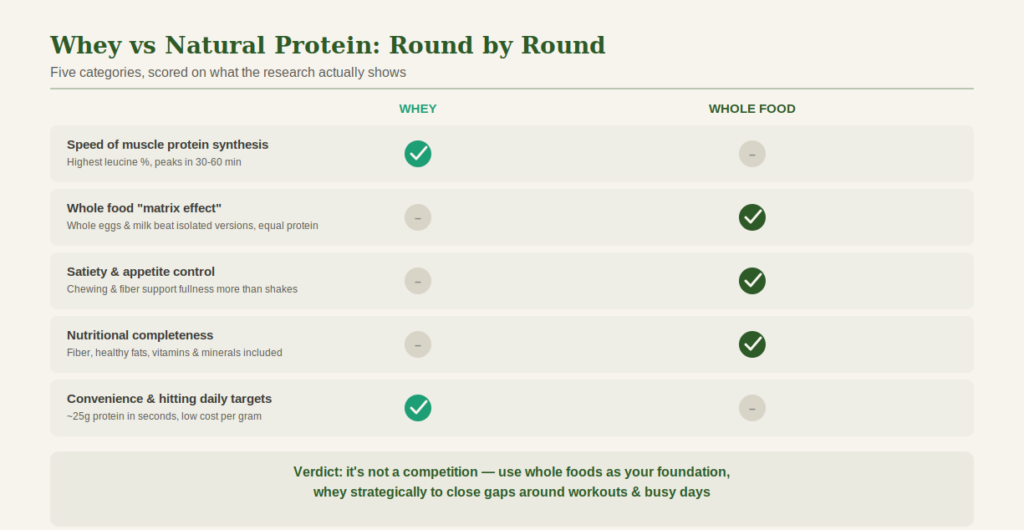
Round 1: Speed and Amount of Muscle Protein Synthesis
This is where whey’s reputation comes from, and the research genuinely supports it — to a point.
Whey is exceptionally fast-digesting, reaching peak blood amino acid levels within roughly 30 to 60 minutes of consumption. It also has the highest concentration of leucine — the specific amino acid most responsible for triggering muscle protein synthesis — of almost any common protein source, at around 11% of its total amino acid content, compared to roughly 8% in beef. Research has consistently found that ingesting an isolated protein source like whey produces a faster, larger rise in blood leucine levels compared to equivalent whole food sources, which corresponds to a faster onset of muscle protein synthesis.
But here’s where it gets more interesting: leucine threshold appears to matter more than the protein’s origin. A controlled study comparing whey protein to a plant-based protein blend found that when the leucine content of the plant-based blend was matched to whey’s leucine content, the resulting muscle protein synthesis response was statistically no different between the two — meaning it’s specifically the leucine delivery, not some unique property of whey itself, that’s driving the anabolic response.
The takeaway: Whey’s speed advantage is real and well-documented, but it comes down to leucine content and digestion speed, not magic. Any sufficiently leucine-rich protein source, in a fast-absorbing form, can produce a similar acute response.
Round 2: The “Whole Food Matrix” Effect
Here’s a genuinely surprising finding that complicates the “isolated protein is always more anabolic” narrative. Several controlled studies have compared whole foods to their isolated components, holding total protein constant, and found that the whole food won.
Research has found that, despite containing an equal amount of protein, whole milk stimulated greater muscle protein synthesis than skim milk, and separately, that whole eggs stimulated greater protein synthesis than egg whites containing the same amount of protein. The likely explanation is what researchers call the “food matrix effect” — the additional fats, micronutrients, and other compounds naturally present in whole foods appear to influence how effectively the protein within them is used for muscle building, in ways that go beyond what protein content and amino acid profile alone would predict.
The takeaway: This is a real point in favor of whole foods that pure amino-acid-focused comparisons tend to miss. A whole food isn’t just “protein plus some other stuff” — the complete package seems to matter.
Round 3: Satiety and Appetite Control
If part of your goal is managing hunger, particularly during a fat-loss phase, this round leans toward whole foods, though the margin is smaller than commonly assumed.
Whole foods typically involve chewing, fiber (in plant-based options), and slower digestion — all of which contribute to satiety signaling in ways a liquid shake generally doesn’t replicate as strongly. That said, head-to-head research comparing protein shakes directly hasn’t found dramatic differences in hunger and fullness between whey and plant-based protein drinks when matched for protein content, suggesting the “shake vs. solid food” satiety gap is more meaningful than the “whey vs. plant powder” gap.
The takeaway: If appetite control during a deficit is a priority, whole, chewable food sources generally have an edge over any powder — but this is more about solid food vs. liquid than about whey specifically.
Round 4: Nutritional Completeness
This round isn’t close. Whole food protein sources bring along fiber, healthy fats, vitamins, and minerals that an isolated protein powder simply doesn’t contain. Chicken, fish, eggs, lentils, and dairy all deliver protein as part of a broader nutritional package — supporting digestive health, micronutrient status, and overall diet quality in ways that a scoop of isolated protein, by design, cannot.
The takeaway: For overall health and nutrition, whole foods are unambiguously the stronger choice. Whey protein is, and was always intended to be, a supplement — a tool to fill gaps, not a foundation to build a diet around.
Round 5: Convenience and Practical Protein Targets
This is whey’s clearest, least-disputed advantage. A single scoop delivers roughly 25 grams of protein in seconds, with no cooking, no preparation, and minimal cost per gram compared to many whole food sources. For people working toward protein targets of 1.6 to 2.2 grams per kilogram of body weight — a meaningfully high number for most adults to hit through whole foods alone, especially across a busy day — whey closes the gap with very little friction.
The takeaway: For total daily intake and practical adherence, whey is a genuinely useful tool, especially for people who are time-constrained, traveling, or simply struggling to consistently hit their numbers through food alone.
So… Which One Is Actually Better?
Based on the research above, the honest answer is: it depends entirely on what you’re optimizing for, and for most people, the smartest approach uses both.
- If your goal is maximizing immediate post-workout muscle protein synthesis with minimal digestive load, whey’s speed and leucine content give it a real, measurable edge.
- If your goal is overall diet quality, micronutrient intake, and long-term health, whole food sources are the clear foundation, supported by the food-matrix research showing whole foods can outperform their isolated components gram-for-gram.
- If your goal is simply hitting a challenging daily protein target consistently, whey’s convenience and low cost-per-gram make it one of the most practical tools available, particularly for closing gaps on busy days.
- If appetite control during a calorie deficit matters most, whole, chewable foods generally provide a satiety advantage over any powder.
This isn’t really a competition with a single winner — it’s two different tools suited to two different problems, and the research increasingly suggests that combining them, rather than picking a side, captures the advantages of each.
A Practical Way to Use Both
A reasonable, research-aligned approach looks something like this: build the majority of your daily protein around whole foods — chicken, fish, eggs, dairy, legumes, paneer — since these support overall nutrition, satiety, and the food-matrix advantage described above. Then use whey protein strategically to close gaps: immediately post-workout when speed matters most, on busy days when whole food prep isn’t realistic, or simply as an easy way to nudge your total daily intake up toward a challenging target without needing to eat several additional chicken breasts.
This combined approach also fits naturally into building sustainable, structured systems around your nutrition — having a reliable, fast protein option available removes one of the most common points of friction that causes people to fall short of their targets on hectic days.
The Bottom Line
Whey protein and whole food protein aren’t really competitors — they’re different tools that excel in different situations. Whey wins on speed, leucine content, convenience, and cost-per-gram. Whole foods win on overall nutritional completeness, satiety, and, surprisingly, even on protein synthesis itself in certain head-to-head comparisons, thanks to the broader food matrix they bring with them.
The question “which is better” is really the wrong question. The better one is: which problem are you actually trying to solve right now? Once you know that, the answer tends to be obvious — and for most people pursuing real, sustained progress, the honest answer is usually both, used intentionally rather than dogmatically.
FAQs: Whey Protein vs Natural Protein
Q: Is whey protein actually a processed, artificial supplement?
A: Not really. Whey is a natural dairy byproduct, separated during cheese production and then filtered and dried into powder form. It’s more accurate to think of it as an isolated, concentrated form of a protein naturally found in milk, rather than a synthetic or artificial product.
Q: Does whey protein build muscle faster than whole food protein?
A: Whey does produce a faster rise in blood amino acid levels due to its high leucine content and rapid digestion, which can lead to a quicker onset of muscle protein synthesis. However, research shows this effect is driven specifically by leucine content and digestion speed, not something unique to whey itself, and certain whole foods have been shown to outperform their isolated protein components when total protein is held constant.
Q: Can I get enough protein from whole foods alone without using whey?
A: Yes, this is entirely possible, though it can require more deliberate meal planning, especially at higher protein targets like 1.6 to 2.2 grams per kilogram of body weight. Whey simply makes hitting that target more convenient, not uniquely possible.
Q: Is it bad to rely mainly on protein shakes instead of whole food?
A: Relying primarily on protein shakes means missing out on the fiber, healthy fats, vitamins, and minerals that whole food protein sources naturally provide, which matters for overall diet quality and long-term health. Most nutrition guidance suggests using whey to supplement, rather than replace, a whole-food-based diet.
Q: When is whey protein actually the better choice?
A: Whey makes the most sense immediately after a workout when fast amino acid delivery is useful, on busy days when whole food preparation isn’t practical, or when you’re consistently falling short of a challenging daily protein target through food alone.
Q: Does combining whey and whole foods work better than using just one?
A: For most people, yes. Using whole foods as the foundation of your protein intake, supplemented strategically with whey around workouts or on busy days, captures the nutritional completeness of whole foods alongside the speed and convenience of whey, without requiring you to choose one approach exclusively.
Q: Is plant-based protein powder a good alternative to whey?
A: It can be, particularly when leucine content is matched to whey’s levels. Research has found that plant-based protein blends with leucine content matched to whey produced a muscle protein synthesis response no different from whey itself, making it a reasonable option for those avoiding dairy.