
On this page
Ever wondered why gym consistency fades? Understand the psychological reasons most people quit—and how to avoid becoming one of them.
January rolls around, gyms fill up, and motivation is at an all-time high. Fast forward to April, and the crowd has thinned out dramatically. If you've ever wondered whether this is just you, here's some context: it isn't. It's one of the most predictable patterns in fitness, and it happens to millions of people, every single year, almost on schedule.
The three-month mark isn't a random cutoff. It's a well-documented psychological cliff edge — and understanding exactly why it happens is the first step to making sure it doesn't happen to you.
The Numbers Behind the 3-Month Drop-Off
Let's start with what the data actually shows, because the scale of this pattern is bigger than most people realize.
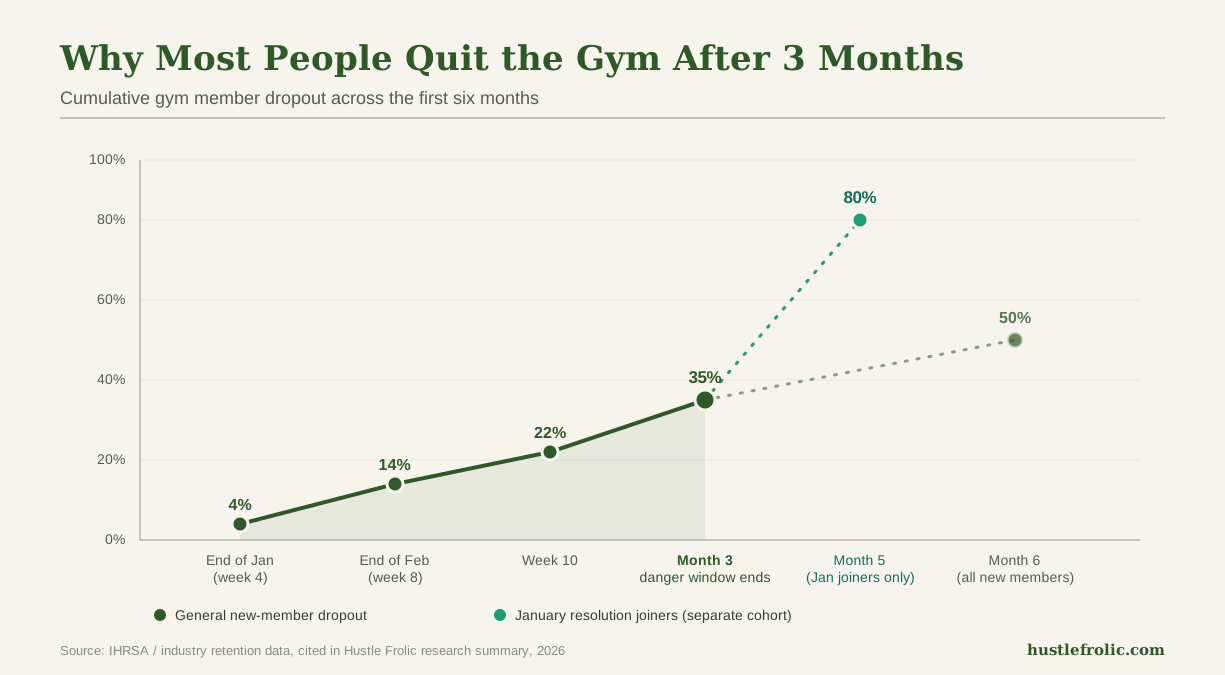
Industry research consistently shows that nearly 50% of new gym members quit within their first six months, often citing cost or lack of engagement as the reason. Zoom in further, and the picture gets even more specific: research tracking New Year's resolution gym-goers found that 80% of January joiners quit within five months, according to data from the International Health, Racquet & Sportsclub Association.
But the real story is in the timing. The same research identifies two distinct dropout waves — a smaller one as early soreness and fading enthusiasm hit in the first few weeks, and a much larger one in the following weeks as results fall short of expectations and the real effort required becomes clear. Critically, the same research notes that those who survive past the three-month mark show dramatically improved long-term success rates — suggesting this window functions as a genuine habit-formation threshold, not just a coincidence.
Other industry analysis points to a slightly later but equally critical window: weeks 6 through 10 are flagged as the single most common dropout period, the point where initial motivation has faded, visible results haven't yet appeared, and the habit hasn't locked in. If someone makes it past that wave, the next major risk point sits right around the 12-week mark.
In other words: if you've ever quit somewhere between month two and month three, you weren't failing at willpower. You were running headfirst into one of the most well-documented psychological patterns in fitness.
Why the 3-Month Mark Is So Psychologically Dangerous
So why this specific window, and not, say, week one or month six? A few overlapping forces collide right around this point.
1. The Motivation You Started With Was Never Built to Last
Most people join a gym riding a wave of extrinsic motivation — wanting to look a certain way for an event, reacting to a doctor's warning, or chasing a New Year's resolution high. According to self-determination theory, a well-established framework in motivation psychology, this kind of motivation sits on a continuum from amotivation to fully internalized, intrinsic motivation. Research applying this framework to exercise consistently finds that individuals who are autonomously motivated — exercising because they personally value it, not because of outside pressure — are far more likely to adhere to exercise over time, while those relying on external rewards or pressure are more likely to drop out entirely.
Three months in, the initial external trigger (the New Year, the wedding, the wake-up-call) has usually faded. If a deeper, personal reason to train hasn't replaced it by then, motivation simply runs out of fuel.
2. Your Body Has Already Adapted — and Progress Has Slowed
Here's something most beginners don't expect: your body adapts to a new training stimulus remarkably fast. Exercise scientists call this accommodation — your nervous system and muscles becoming highly efficient at a specific movement pattern, which means the same workout starts producing less and less stimulus over time. Research on training adaptation shows this process can begin within just 6 to 8 weeks of consistent training, which lines up almost exactly with the danger window described above.
The frustrating part? You're often putting in the same effort, but the visible payoff has slowed — right at the moment your patience is already wearing thin.
3. The Three Psychological Needs Aren't Being Met
Self-determination theory also identifies three core psychological needs that have to be satisfied for motivation to become self-sustaining: competence (feeling capable and effective), autonomy (feeling in control of your own choices), and relatedness (feeling socially connected). When a gym routine fails to meet these — say, a person feels lost and incompetent on the gym floor, follows someone else's rigid plan with zero input, and works out alone with no community — all three needs go unmet simultaneously. That combination is a near-perfect setup for dropout.
4. Unrealistic Expectations Collide With Reality
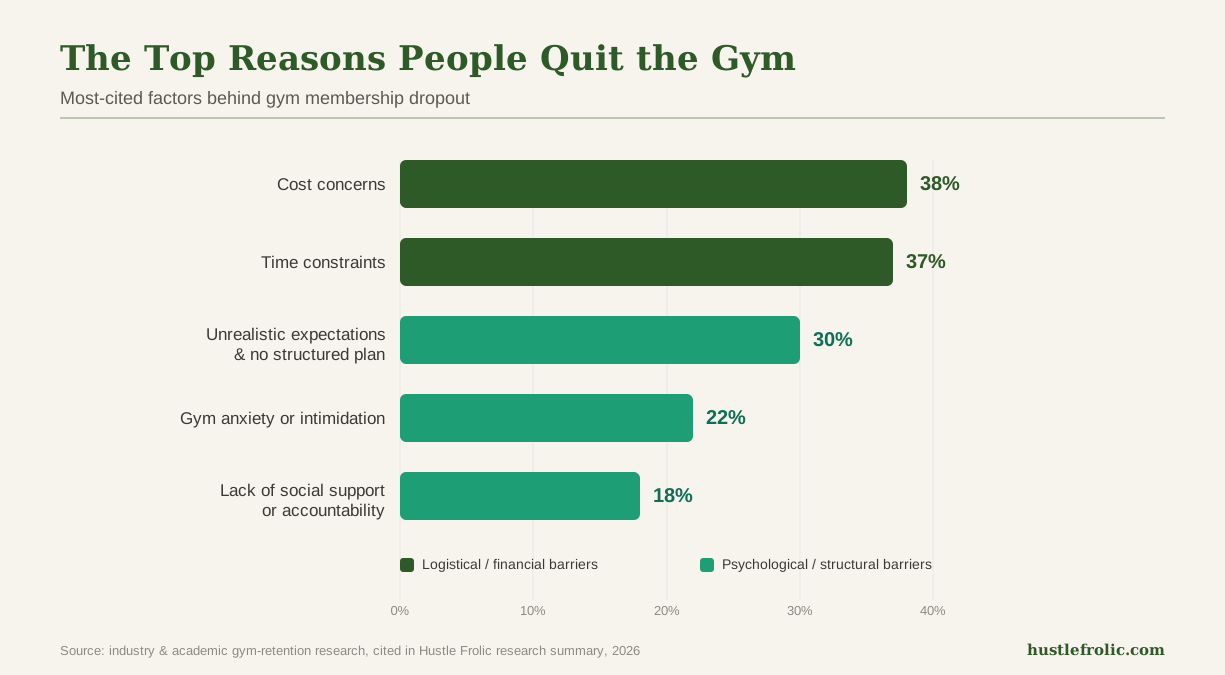
Fitness marketing sells fast transformations. Real physiology doesn't move that fast. Research on gym dropout consistently lists unrealistic expectations and going too hard too fast among the primary, solvable reasons people quit — alongside lack of a structured program and absence of accountability. When the mental picture of "three months from now" doesn't match the mirror, disappointment sets in exactly when persistence matters most.
5. Life Returns to Normal — and the Gym Becomes Optional
In the first few weeks, novelty and enthusiasm carry people through scheduling friction. By month three, life has fully reasserted itself: work deadlines pile up, the new-gym excitement has worn off, and training starts competing directly with everything else on the calendar. Without a structure that's already survived a busy week, the gym is often the first thing to get quietly deprioritized.
6. One Missed Week Becomes a Permanent Break
Injuries, travel, illness — all normal parts of life — frequently trigger total dropout rather than a temporary pause. Research published in the British Journal of Sports Medicine has shown that even a short break from training significantly raises the likelihood of complete dropout, not just a slower return. The danger isn't the missed week itself. It's the absence of a plan for getting back on track afterward.
How to Avoid Becoming a 3-Month Statistic
The good news in all of this: every single factor above is solvable. None of it requires becoming a more disciplined person — it requires structuring things differently from day one.
Build Intrinsic Reasons Early, Not Just Extrinsic Ones
Don't rely solely on appearance-based or deadline-based motivation. Actively look for reasons to enjoy training itself — a sport you find genuinely fun, visible strength gains, stress relief, or the satisfaction of skill progress. The more your motivation shifts from "I have to" to "I want to," the less it depends on external pressure that inevitably fades.
Expect the Plateau — and Plan Around It
Knowing in advance that progress naturally slows around weeks 6 to 8 takes the sting out of it when it happens. Build in planned changes to your training — adjusting volume, intensity, or exercise selection every 4 to 6 weeks — so your body keeps adapting instead of stalling out right when motivation is already fragile.
Get a Structured Plan From Day One
Vague, improvised gym sessions are a major dropout risk. A clear, structured program — knowing exactly what to do, in what order, with what weights — removes decision fatigue and replaces guesswork with visible progression, which directly supports the "competence" need that sustains motivation.
Build in Relatedness — Don't Train in Isolation
Whether it's a training partner, a coach, a class, or even an online community, social connection is one of the three psychological needs research consistently ties to long-term adherence. Removing isolation from your routine isn't a "nice to have" — it's a structural fix for one of the core reasons people quit.
Set Realistic, Process-Based Goals
Instead of "lose 10 kilos by month three," set goals tied to behavior you control: training three times a week, adding 2.5 kg to your squat, hitting your protein target five days a week. Process goals keep you anchored to what's actually within your control, so slower-than-expected aesthetic changes don't feel like total failure.
Have a Pre-Built Plan for Disruptions
Since even short breaks significantly raise dropout risk, decide in advance how you'll handle travel, illness, or a brutal work week — a reduced-volume session, a home-based backup workout, or simply permission to return at 70% effort rather than waiting for a "perfect" restart. The plan for disruption matters more than the disruption itself.
Track the 12-Week Mark as a Milestone, Not a Finish Line
Given how clearly research points to this window as the critical threshold, treat reaching three months of consistent training as a genuine milestone worth acknowledging — not just another week. People who push through this specific window show dramatically better long-term adherence, so recognizing it can reinforce exactly the behavior you want to continue.
The Bottom Line
Quitting around the three-month mark isn't a personal failure — it's a predictable collision of fading extrinsic motivation, slowing visible progress, unmet psychological needs, and life simply getting busier. Every one of these factors has been studied, and every one of them is addressable with the right structure in place before the danger window even arrives.
The people who make it past month three usually aren't more disciplined than everyone else. They've simply built training into something that meets real psychological needs — competence, autonomy, and connection — rather than relying on a motivational spark that was never designed to last. Build that structure now, and the three-month cliff stops being something to fear.
FAQs: Why People Quit the Gym After 3 Months
Q: Is it normal to lose motivation around 3 months of going to the gym?
A: Yes, it's extremely common. Research consistently identifies the weeks-6-to-12 window as the highest-risk period for gym dropout, driven by fading initial motivation, slowing visible progress, and life returning to its normal pace. It's a predictable pattern, not a personal failing.
Q: Why do gym results seem to slow down after a couple of months?
A: Your body adapts to a consistent training stimulus remarkably quickly — a process exercise scientists call accommodation. This adaptation can begin within 6 to 8 weeks, meaning the same workout starts producing less visible progress right around the time motivation is already starting to fade.
Q: What's the difference between intrinsic and extrinsic motivation for exercise?
A: Extrinsic motivation comes from outside pressure or rewards, like wanting to look good for an event or following a doctor's advice. Intrinsic motivation comes from genuinely valuing or enjoying the activity itself. Research shows people with more intrinsic, autonomous motivation are significantly more likely to stick with exercise long-term.
Q: How long does it take for a gym habit to actually feel automatic?
A: Most behavior-change research suggests a new habit needs roughly 8 to 12 consistent weeks before it starts feeling automatic rather than effortful. This lines up closely with the well-documented three-month dropout window — surviving it tends to mark a genuine turning point.
Q: Does missing a week at the gym mean I've ruined my progress?
A: No, but it does raise your risk of fully dropping out if you don't have a plan for getting back on track. Research shows short breaks significantly increase dropout risk — not because of lost fitness, but because people often treat the break as a reason to quit entirely rather than simply resume.
Q: What can I do differently to avoid quitting like most people do?
A: Focus on building intrinsic reasons to train, follow a structured program instead of improvising, add a social or community element, set process-based goals instead of purely aesthetic ones, and have a pre-built plan for handling disruptions like travel or illness.
Q: Is the 3-month dropout pattern the same for everyone?
A: The general pattern is remarkably consistent across demographics and gym types, though individual timing varies. What matters most isn't the exact week, but recognizing that motivation naturally dips around this period for almost everyone — and building structure that doesn't depend on motivation staying high.